Screen time and primary-aged children: what actually matters
If you’ve ever felt a pang of guilt watching your child zone out in front of a tablet, you’re not alone. Screen time is one of the things parents worry about most, and honestly, with so many conflicting messages out there, it’s no wonder.
But here’s the thing: the conversation around screens and children is a lot more nuanced than “screens are bad, get them outside.” The reality is more useful than that and a lot less scary.
Let’s dig into what actually matters when it comes to screens and your primary-school-aged child.
First, let’s talk about why this feels so stressful
Earlier this year, the Department of Health and Social Care (DHSC) published new guidance on screen time for young children. It got a lot of attention and understandably sparked fresh anxiety for parents. When the government weighs in, it can feel like you’re being judged for every episode of Bluey you’ve let run while making dinner.
But when you actually read the guidance, it’s much more reassuring than the headline suggests. It was developed in response to parents asking for practical, non-judgemental advice. It’s not a list of things you’re doing wrong. It’s a starting point for thinking about screens more intentionally.
What the guidance actually says (in plain English)
The new UK guidance focuses mainly on children under five, the early years, when 90% of a child’s development happens. For this new age group, the advice is:
- Under 2s: Avoid screens other than video calls (Facetiming grandparents counts as quality time- phew)
- 2-5 year olds: Aim for no more than an hour a day, avoid screens at mealtimes and the hour before bed.
For primary-school-aged children (5-11), the guidance is less prescriptive. That’s intentional. Children this age are in a different developmental stage- screens for homework, reading, creative projects and even social connection play a legitimate role in their lives.
The question for this age group isn’t really “how many minutes?” It’s about what they’re watching, how they’re watching it, and what it’s crowding out.
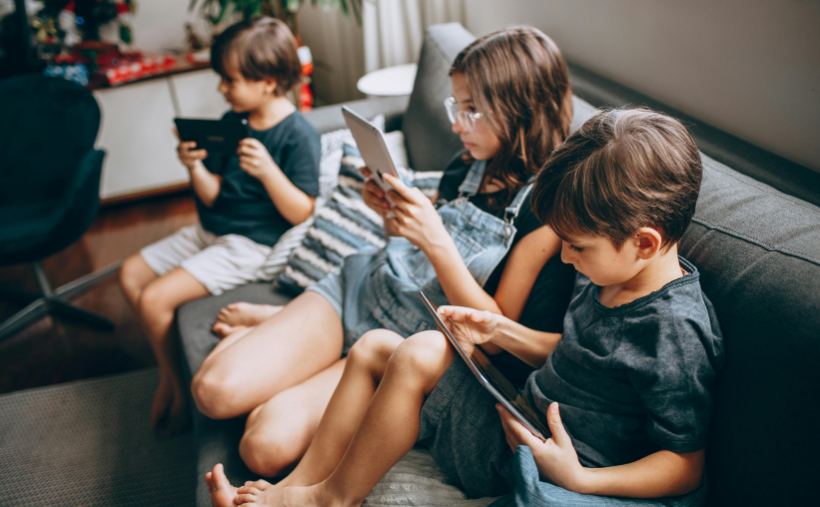
What actually matters: the three questions worth asking
Rather than watching the clock, here are three things that genuinely make a difference for primary-aged children.
1. Is screen time replacing the stuff that really counts
Children need sleep, physical activity, face-to-face connection and unstructured play. These aren’t optional extras, they’re the building blocks of healthy development. If your child is getting enough of those things, a bit of extra screen time is much less of a concern. If screens are consistently getting in the way of sleep or active play, that’s worth paying attention to.
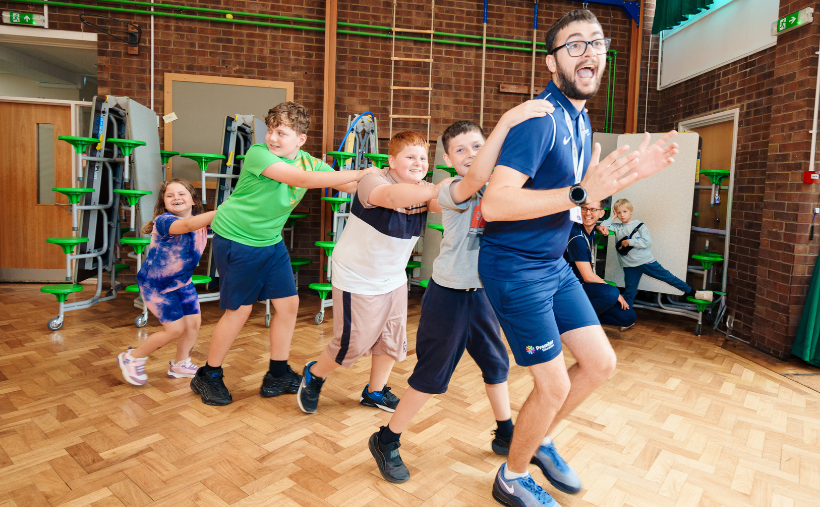
At Premier Education, we see every day how much children benefit from being active and engaged. Whether it’s a holiday club, breakfast club or an after-school session – the energy, focus, and confidence that comes from physical play is genuinely hard to replicate on a screen.
2. What are they watching (or doing)?
Not all screen time is created equal. Slow-paced, age-appropriate content that invites thinking, imagination or conversation is very different from fast-paced, algorithm-driven videos designed to keep eyes glued.
Similarly, a child using a tablet to draw, code or work through an educational game is doing something different from passively watching content for two hours.
Research consistently shows that how children engage with screens, and whether it’s active or passive, matters more than the number of minutes.
3. Are you watching together sometimes?
One of the clearest findings in the research is that co-viewing – watching alongside your child, asking questions, talking about what you’re seeing – is linked to better outcomes than children watching alone. You don’t have to sit through every episode, but making it a shared experience sometimes can turn screen time into something genuinely connecting.
What doesn’t matter as much as you might think
The exact number of minutes. There’s no magic number that separates ‘fine’ from ‘too much’. Context matters far more than the clock.
Whether your child ever watches screens. Screens are part of life. Children who grow up with healthy relationships to technology are better prepared for the world they’re growing up in.
One bad day (or week). Screen time naturally goes up and down – during the school holidays, when children are ill, when parents are stretched. That’s normal, and it doesn’t undo anything.
Small swaps that actually help
If you want to make a positive shift without turning screens into a battleground, the guidance suggests some simple swaps:
- A bedtime story instead of a programme in the hour before sleep (this one’s genuinely worth it- screens before bed can disrupt sleep quality, and sleep really does matter for school-age children.)
- A simple game or conversation at mealtimes instead of a device at the table.
- Agreeing on when screens happen, rather than constantly negotiating – children do better with predictable routines.
If your child is spending a lot of time on screens during the school holidays, holiday clubs are a brilliant way to shift the balance. They get active, make friends, build confidence, and come home tired in the best possible way.
The bottom line
You don’t need to be perfect. You don’t need to count every minute. What you do need is a rough sense of whether screens are working for your family or quietly working against it.
Most parents are getting this right already- they’re just not giving themselves any credit for it. If you’re looking for ways to get your primary-school-age child more active and less screen-dependent during the school holidays or before and after school, we’d love to see them! Explore our holiday clubs and wraparound care options here.
At Premier Education, we’re the UK’s largest provider of wraparound childcare and holiday clubs- built around active, expert-led sessions that children love. Find out how we can support your family.
Happy Kids. Healthy Futures.
